


Where Virginia's Story Flows: Exploring the History of West Point & King William County

Some destinations preserve history behind glass. Others allow you to walk through it.

In West Point and King William County, Virginia, history lives in centuries-old churches, colonial courthouses, quiet country roads, waterfront parks, Native American cultural sites, and the rivers that have carried people, commerce, and stories for thousands of years.
Located on Virginia's scenic Middle Peninsula, where the Mattaponi and Pamunkey Rivers join to form the York River, this remarkable destination invites visitors to discover more than 300 years of American history—and thousands of years of Indigenous heritage—all while enjoying the charm of a welcoming small town and picturesque countryside.
Whether you're a history enthusiast, architecture lover, paddling adventurer, or weekend explorer, West Point and King William County offer countless ways to experience Virginia's past.
A Homeland Long Before Virginia Was Virginia
Long before English settlers established Jamestown in 1607, this landscape was home to thriving Native American communities. The region formed part of Tsenacommacah, the homeland of the Powhatan Confederacy, a powerful alliance of approximately 30 Algonquian-speaking tribes led by Wahunsenacawh, known to history simply as Chief Powhatan.

Among those tribes were the Pamunkey and Mattaponi, whose people lived along the rivers that still bear their names. Unlike many Indigenous communities across America, both tribes have maintained an unbroken connection to their ancestral homeland for centuries. Today, Virginia's oldest continuously recognized tribal reservations remain in King William County, making the area one of the Commonwealth's most culturally significant destinations.
King William County: More Than 300 Years of History
To explore King William County is to step into one of the oldest chapters of Virginia's history. Long before modern roads and towns connected the Commonwealth, the Pamunkey and Mattaponi Rivers served as vital corridors for Native American communities, English settlers, merchants, and travelers. Along their banks, government took shape, churches were established, commerce flourished, and generations of Virginians built the communities that helped define the colony.

Established on April 11, 1702, King William County is one of Virginia's oldest counties. Named for King William III of England, the county quickly became an important center of colonial government, agriculture, and river commerce. Its fertile farmland and navigable waterways made it an ideal place for settlement, while its central location in Virginia's Tidewater connected people and goods throughout the region.
The Pamunkey and Mattaponi Rivers served as the county's original highways, carrying tobacco, timber, grain, and travelers long before paved roads existed. Ferries linked communities across the waterways, and life revolved around the rivers that sustained commerce, transportation, and daily life.
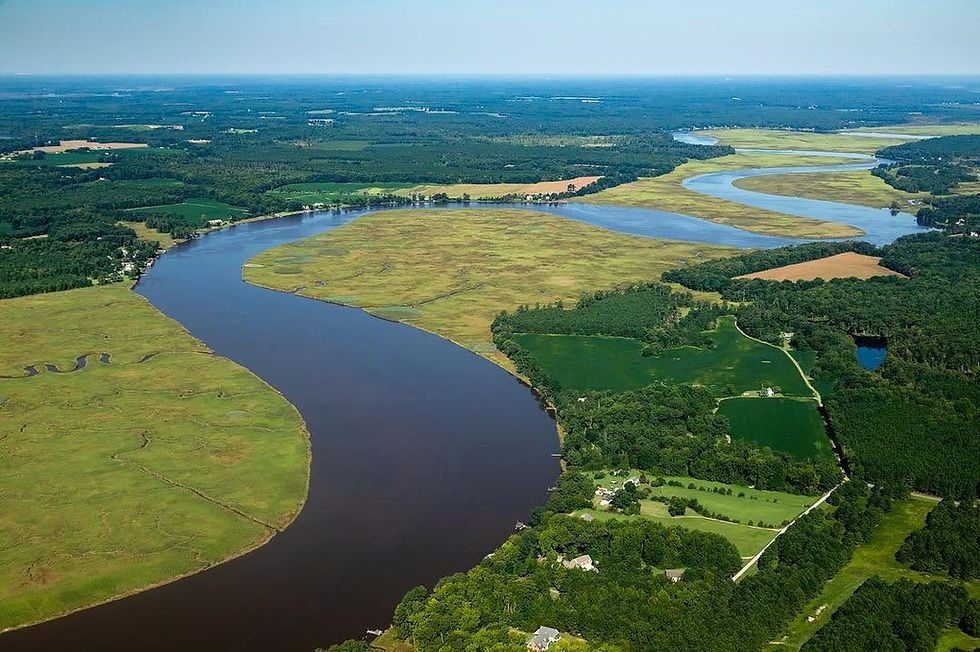
Today, visitors can still experience much of that same landscape. From the historic courthouse and centuries-old churches to scenic river overlooks and quiet country roads, King William County offers a rare opportunity to explore a place where Virginia's colonial heritage has been remarkably preserved and where every stop reveals another piece of the Commonwealth's story.
West Point: From Native Village to River Town
West Point's story begins at the confluence of two historic rivers. Originally the site of the Native village of Cinquoteck, the location became strategically important because it sat where the Pamunkey and Mattaponi Rivers merge to create the York River.
Over time, West Point evolved into one of Tidewater Virginia's busiest ports. During the nineteenth and early twentieth centuries, steamships, railroads, seafood industries, lumber mills, and tourism transformed the town into a thriving commercial center. Visitors once arrived aboard elegant steamships to vacation at grand waterfront hotels overlooking the York River.

Today, many of the town's historic buildings remain beautifully preserved along Main Street, offering a glimpse into the era when West Point was one of Virginia's premier waterfront destinations.
Explore History Throughout the Region
One of the best ways to experience West Point and King William County is by visiting the museums, churches, historic districts, and cultural sites that bring these stories to life.
West Point Historical Society Museum
Begin your journey at the West Point Historical Society Museum, where more than 2,000 artifacts tell the story of the town's military, maritime, industrial, and community history. Visitors can browse exhibits, explore a local history library, and discover newspapers dating back to the 1890s.

Museum of the Streets
Continue outside with West Point's Museum of the Streets, a self-guided outdoor museum that transforms downtown into a living history experience. Historical markers throughout town share stories about businesses, homes, churches, industries, and notable residents.
Pair the markers with the Historical Society's self-guided walking tour to explore Victorian homes, former hotel sites, ferry landings, oyster houses, historic storefronts, and scenic Beach Park overlooking the York River.
King William Historical Museum
Located beside the historic courthouse, the King William Historical Museum tells the broader story of the county through exhibits featuring Native American artifacts, African American history, colonial life, agriculture, transportation, archaeology, and local families.
Museum volunteers also offer tours of the original courthouse, providing visitors with fascinating insights into colonial government and everyday life.

Pamunkey Indian Museum & Cultural Center
To fully appreciate the region's history, a visit to the Pamunkey Indian Museum & Cultural Center is essential.
Located on the Pamunkey Reservation, the museum shares the living history of one of America's oldest Indigenous communities through exhibits on pottery, river life, traditional crafts, archaeology, treaties, and contemporary tribal culture. Rather than telling only the past, the museum highlights a culture that continues to thrive today, making it one of Virginia's most meaningful heritage destinations.

Historic Sites Worth Exploring
History lovers can easily spend a full weekend exploring the area's remarkable landmarks.
King William Courthouse Historic District
Built around 1725, the King William County Courthouse is recognized as the oldest courthouse in continuous judicial use in the United States. The beautifully preserved colonial courthouse remains the centerpiece of one of Virginia's finest surviving eighteenth-century courthouse greens. Nearby stand the historic clerk's office, old jail, and museum, creating one of the Commonwealth's most complete colonial civic complexes.

Acquinton Church
One of Virginia's oldest Episcopal congregations, Acquinton Church traces its origins to the colonial era. The church and surrounding cemetery reflect centuries of worship and community life, while ongoing preservation efforts continue to protect this treasured landmark.

Mangohick Church
Another beautiful stop is historic Mangohick Church, whose roots reach back to the eighteenth century. Surrounded by peaceful countryside and historic gravesites, it provides visitors with a glimpse into colonial Virginia's religious heritage.

Historic Downtown West Point
Tree-lined Main Street remains one of Virginia's most charming historic downtowns. Walk among early twentieth-century commercial buildings, restored homes, local shops, restaurants, and waterfront parks before ending your visit at Beach Park, where the Pamunkey and Mattaponi Rivers become the York.

Historic Homes & Virginia Landmarks
Throughout King William County, scenic backroads reveal historic farmsteads, cemeteries, churches, and numerous Virginia Historical Highway Markers that interpret the area's rich past. Every drive becomes an opportunity to discover another chapter of Virginia history.

Experience History from the Water
The rivers remain the heart of the region.
Launch a kayak on the Pamunkey or Mattaponi Rivers, paddle through landscapes traveled by Native Americans for generations, or spend an afternoon fishing and watching bald eagles soar overhead. These same waterways shaped settlement, trade, transportation, and recreation for centuries—and they continue to define the character of the region today.

A Weekend History Itinerary
Friday Evening
Stroll Historic Downtown West Point.
Visit the Museum of the Streets.
Watch sunset at Beach Park.
Saturday
Tour the West Point Historical Society Museum (check for hours)
Drive scenic roads into King William County.
Explore the King William Historical Museum and Courthouse. (check for hours)
Visit Acquinton Church and Mangohick Church.
Enjoy lunch at a local restaurant before exploring the countryside.
Sunday
Visit the Pamunkey Indian Museum & Cultural Center (check for hours).
Paddle or fish the Mattaponi or Pamunkey Rivers.
Follow Virginia's historic highway markers as you make your way home.
Where Virginia's Past Meets the Present
West Point and King William County offer something increasingly rare: authentic places where history isn't recreated—it has simply endured.
Here, you can stand inside a courthouse that has served Virginians for three centuries, walk streets once lined with steamships and grand hotels, explore museums filled with local stories, visit churches where generations have worshipped since colonial times, and learn directly from one of America's oldest Indigenous communities.
Every river bend, courthouse brick, church bell, and downtown storefront reminds visitors that history is not simply something to read about—it is something to experience.
Whether you're planning a day trip or a leisurely weekend getaway, West Point and King William County invite you to discover a destination where Virginia's story is still being written.


Comments